
Do New Builds Increase in Value Over Time?
Don’t miss out on the best new investment deals. Enter your details now to sign up to our mailing list and receive exclusive information straight to your inbox.
The Deal with New Build Property Investment
In the world of property investment, your decisions really do matter.
So, it’s crucial that you consider all of your options before taking a leap.
One of the initial factors you’ll need to figure out is your investment strategy.
A popular tactic at the moment is buying new build properties.
A new build is essentially a brand-spanking-new property that has never been lived in and has become an attractive option for many property investors.
With lower maintenance costs and modern furnishings, there is almost definitely a clear advantage compared to buying an existing property.
So, do new builds increase in value?
Is buying a new build a good investment?
Keep reading to find out.
The UK Property Market in 2026 - What's Predicted?
Learn whether 2026 is a good year to invest with our key predictions for the year ahead, as well as a look back on 2025 and how the market performed. Download your essential guide now!
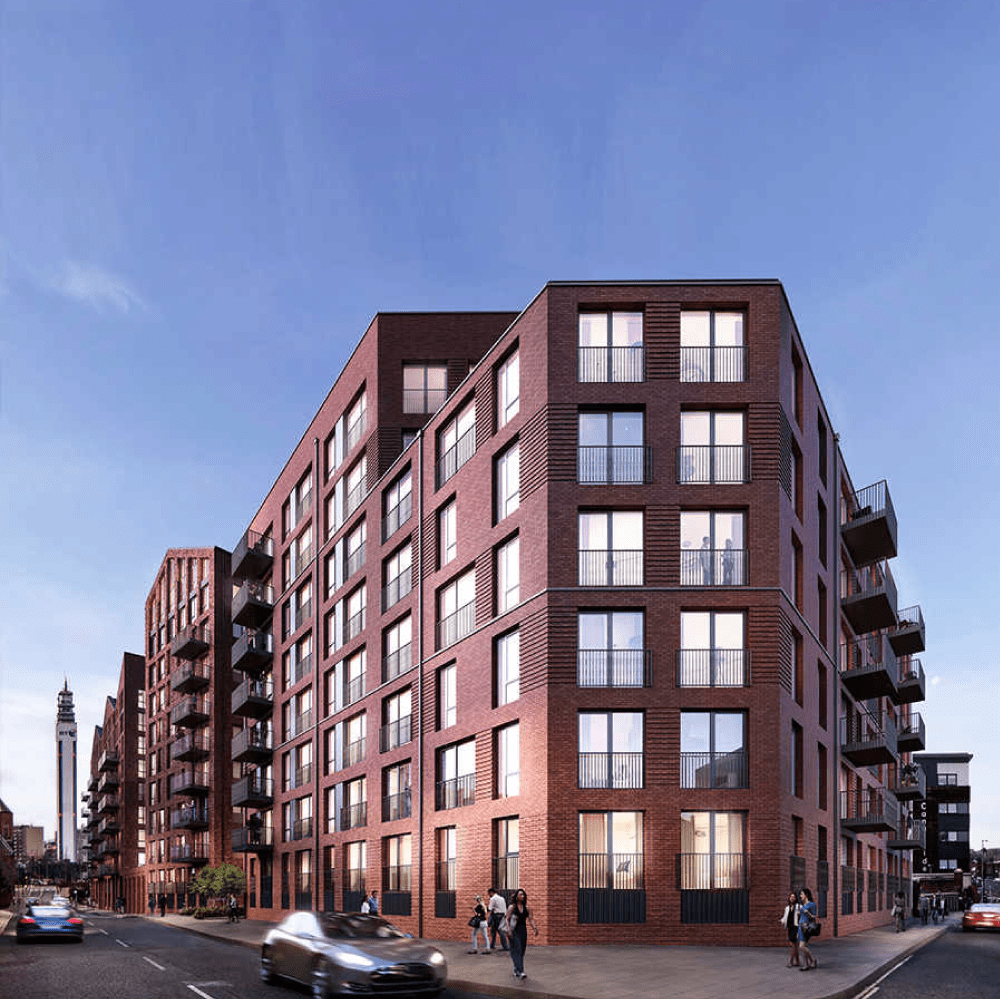
Is A New Build Home a Good Investment?
The UK property market has moved on from the somewhat frantic price growth seen in the early 2020s and is now in a phase of steadier, more sustainable expansion. According to recent indices from Nationwide and the Land Registry, average UK house prices are hovering around the high-£260,000s to low-£270,000s, with annual growth running at roughly 1-3% and forecasts pointing to only modest increases over the next few years.
With rental demand remaining strong and analysts expecting gradual capital appreciation rather than dramatic spikes, many investors still see this as an attractive moment to enter the market, particularly in regions benefitting from regeneration and solid local economies. But are new builds actually worth it?
As briefly mentioned, there are a whole lot of perks to investing in a new build property:
Ready-to-Go
The most obvious is that everything is new. As most new builds typically come fully furnished with all the necessary goods, your tenant can move in on day one and (hopefully) start as they mean to go on with a property that needs no costly or inconvenient repairs/renovations.
For investors, this also means that you can instantly start seeing returns on your investment.
New Builds Are More Energy Efficient
With sustainability increasingly becoming a priority for homeowners and tenants, new build properties have a distinct advantage over older properties – a top energy efficiency rating.
As new build homes are built to adhere to current building regulations, they are more energy-efficient. This is excellent news for your wallet, as homes with high energy efficiency will not need additional features like double glazing or new boilers.
Easier Buying Process
New build properties are usually purchased directly from the developer of the project, or the property investment company selling on the developers behalf, which can often dramatically speed up the buying process.
This is often a “chain-free” transaction, as buyers don’t need to wait for individual sellers to secure a mortgage to buy another home.
Projected annual rental income as high as £28,345 and predicted £86,929 capital growth by 2030. Interested?
Enquire about Fox & Foundry today, our latest addition to Liverpool’s fastest-growing regeneration area, with prices from £189,950. Growth prediction based on North West projected capital growth, Savills.

Are New Builds Overpriced?
The question of whether new builds are more expensive compared to older properties depends on the property itself and the company selling it.
You may have heard of the ‘new build premium’ – this is a term used to describe this price difference that some buyers find between older properties and new builds.
The reason for this difference is that everything is brand new and completely unused and energy-efficient, and built to a (hopefully) high-quality spec.
According to the latest UK House Price Index data, new build homes continue to command a noticeable premium over existing properties, with average prices for new builds now sitting well above resales in most regions. While exact figures vary by area and property type, industry analysis suggests new build buyers commonly pay around 10-25% more than they would for a comparable older home, and in some regeneration hotspots, the premium can be even higher.
So, are new builds always more expensive? For owner-occupiers, the premium often reflects demand for energy-efficient, low-maintenance homes in desirable, well-connected locations. For investors, however, the picture can be different: off-plan and early-phase opportunities frequently come with discounted launch pricing, incentives, or below-market entry points that can make a new build apartment more affordable than a comparable completed unit once the scheme is finished and fully tenanted.
In other words, while headline prices for new builds tend to be higher, savvy investors can still access them at attractive, and sometimes below-market, levels by buying early in the development cycle.
Buying Off-Plan
Many new build homes can be purchased through off-plan investment.
This essentially means buying a property that hasn’t yet been completed.
The advantage of buying off-plan properties is that developers will often offer incentives to convince you to invest, including free furniture packages and price discounts.
By purchasing a new build with a top developer or investment company, you’ll be saving yourself thousands of pounds.
Do New Builds Increase in Value?
So, there’s no denying that there are some advantages to purchasing a new build property.
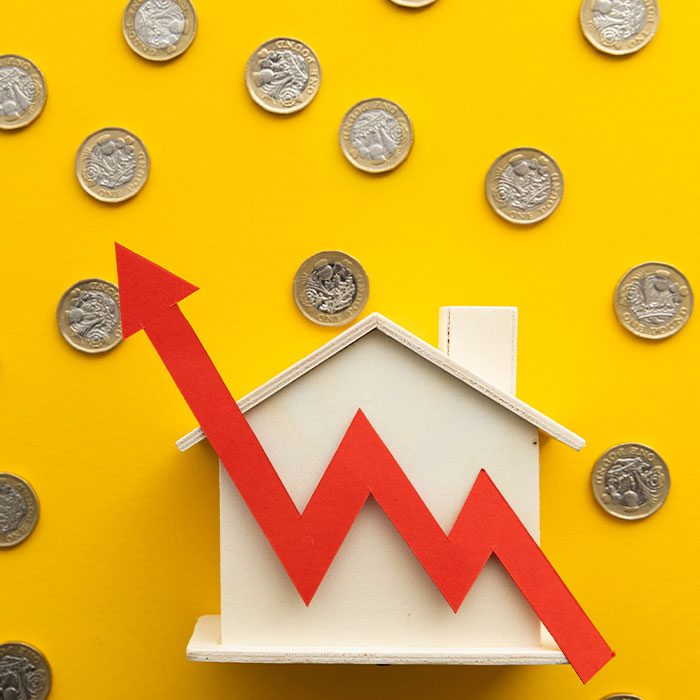
However, much like buying a new Lamborghini, there can sometimes be some depreciation with new build houses and flats.
The reality is that any new build home could potentially lose value when it’s no longer ‘brand new’.
When looking at new build apartments sold by us at RWinvest, however, it’s clear that impressive capital growth rates are still possible when investing in new build off-plan properties.
Take our past completed project, City Terraces. A unit in this development was first sold for £125,995 in 2018, and then by 2021, had increased in value by 17.86% by the time it was resold.
So, with this in mind, when questioning ‘do new builds increase in value?’, the reality is that investors can definitely make strong capital growth returns on new build properties, as long as they invest wisely and purchase properties in high-growth locations.

How to Increase the Value of A New Build
If you’re interested in buying a new build property, you’re probably wondering how to minimise any loss in value and boost your chances of capital appreciation. Here are some key tips:
Focus on Location
Picking the right location is vital in property investment, no matter which strategy you use.
Depending upon which part of the UK your chosen property is in, there are substantial regional variations in house prices, rental income, rental demand, rental yields, and capital growth potential.
By picking the right area for rental properties, you’ll be able to maximise your chance of a successful property investment.
Regenerative efforts are particularly desirable as they can directly impact public opinion, demand and, in turn, property prices. Nothing makes a spot more lucrative than population growth, and, as stated, regeneration helps massively in this department.
Projects that will improve local infrastructure and transport are usually an indication that a location has the potential to become an investment hotspot.
Essentially, if you pick the right spot, there will always be demand for properties in the area, and, most importantly, your new build property will be likely to retain its value well.
You can read our complete guide to the best places to invest in UK property to learn about the best areas to invest in new build property for enhanced capital growth.
Consider Property Type (And The ‘Right’ Tenant)
The type of property you choose to invest in can also help minimise any potential losses in the future – as well as the kind of tenant you choose to appeal to.
Buying new build properties means you could potentially be investing in several different strategies – including commercial real estate, student property investments, city-centre apartments, or family homes.
Your property type and strategy will likely depend on how much money you can spend and your investment goals.
For example, student properties and city centre-based apartments will be much more affordable than family homes.
While this could mean less capital growth in the long term, you are likely to enjoy higher rental income and rental yields due to the lower prices.
The type of investment you choose will also impact the location you pick.
For student property, you’ll want to buy properties close to university campuses in a location with a considerable student population.
For more on this, take a look at our student property investment guide.
The biggest takeaway, in general, is that if you want to avoid new build depreciation and make the most out of your investment, you must ensure your property generates as much long-term interest as possible.
'Should I Buy a New Build?'
So, are new builds a good investment?
If you’re looking for an attractive investment prospect with high interest from tenants and the potential for strong growth, then yes, new builds make a good investment.
Do new builds depreciate in value?
In some cases, yes, but this is dependent on the type of property you buy, its location, and other factors.
With lower maintenance costs, excellent energy efficiency and a relatively easy buying process, there’s a lot to love about new build properties.
To be completely successful, it’s crucial that you keep up to date with all of the latest trends, do your research and maybe – just maybe – speak with some experts.
And, as much as we all wish it was so simple, you’re probably going to need a few more resources before diving straight into your new investment.
So, check out our UK Property Investment guide for the latest statistics and trends.
Or, if you feel like you’re ready to start taking your first steps, feel free to look at some of our latest properties to see if any are the right fit for you.

Share:


Contact Us
Want to Get in Touch?
Fill in the form to contact us today and a member of our award-winning property team will be in touch to help.

It will be my third investment apartment with RW Invest and I cannot recommend them highly enough. Sean Orrett and Chloe Walker really do go the extra mile. Chloe in particular helped me through a particularly hard time with solicitors and all the paperwork that was involved. Living in a different country and negotiating all the nuances that come with investing, she negotiated with ease and gusto. A big thanks to you both.


Daniel Stewart, has assisted me every step of the way. This is my first property purchase and so took Daniel up on his offer to guide me through every step no matter how small. I felt comforted to have his assistance in documents I needed to both understand and sign. Couldn't be happier with the help and customer care I have received so far.


We highly recommend RW Invest to anyone looking for an experienced, reliable and knowledgeable professional company.
We are more than delighted with their services throughout the entire process. They provided us with extremely helpful advice and guidance every step of the way and ensured that we understood all aspects involved in securing a property through them.

Chloe is very helpful. She has been a great help and solved all the difficulties I had with the purchase. I am happy she was there to help with the process. Very approachable and responsible.

This was my second unit purchase with RWinvest, and I found the team to be very helpful in finding the best deal which suited my needs and budget. Arjun Surana, Adam Burns were really processional in answering all questions, Excellent follow up and ensures your property purchase are smooth from the start to end and supporting throughout the purchase/exchange of contract process.
I highly recommend anyone to purchase their property with RWinvest.

